Sayacare
Bringing Clarity and Trust to Online Medicine Ordering
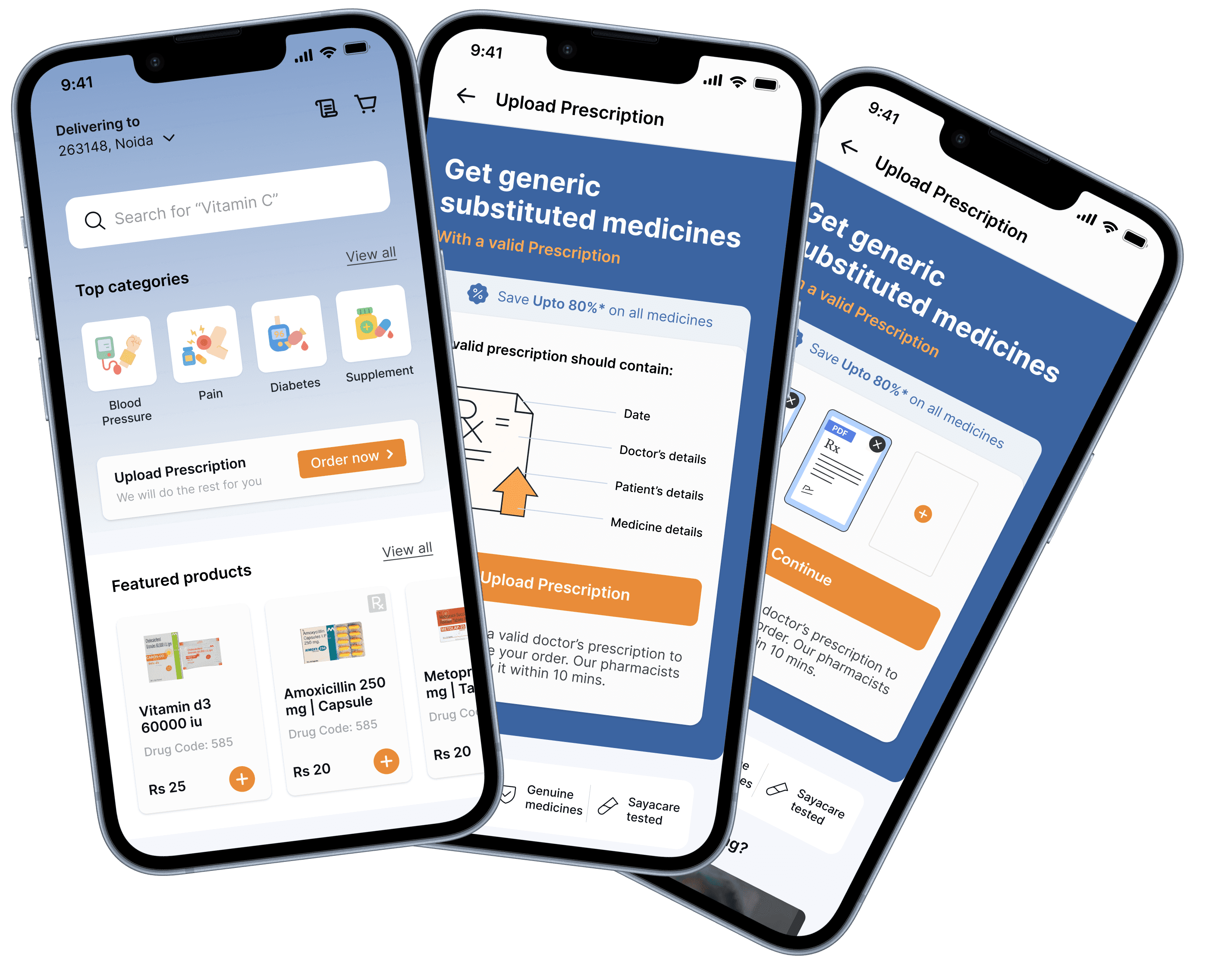
Sayacare is an online pharmacy that provides affordable, double-tested generic medicines.
I genuinely liked the idea same quality but at way lower prices I studied the experience, ran a quick survey, and redesigned the friction points, this case study captures how the core flows were transformed for clarity and trust
Timeline
Jan 25– March 25
Project Type
Health, Pharmacy
Role
UI/UX designer
Skills & Tools
Figma
User interviews
Prototyping
User testing
Role/
Research & Design
Performed competitor analysis, created user-personas , conducted 5 user interviews and
2 rounds of user testing, and synthesized insights into actionable design ideas
Impact
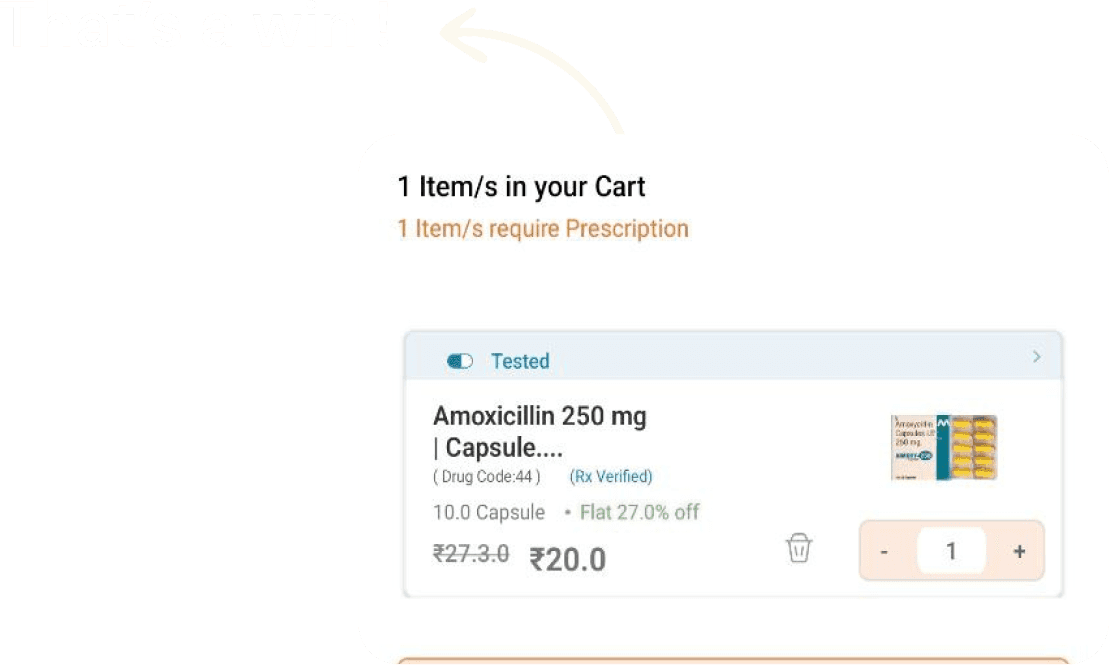
Shortly after, presenting the case study to Sayacare founders, they implemented clearer prescription cues in the cart experience.
Problem Discovery/
Backstory
While ordering a prescription medicine through Sayacare, I noticed uncertainty around prescription requirements and order completion. In a flow meant to reduce stress, this ambiguity created hesitation prompting me to explore how clarity and trust could be improved.
Hypothesis
Ingredient labels are widely confusing, but confusion alone doesn’t drive behavior. Existing solutions break at the moment users need them most and existing solutions in the market were of no help either:
• AI scans depend heavily on image quality and label consistency, leading to missed or inaccurate insights.
• Barcode-based apps often provide generic rating ignoring the individual needs and most of them fail for Indian products.
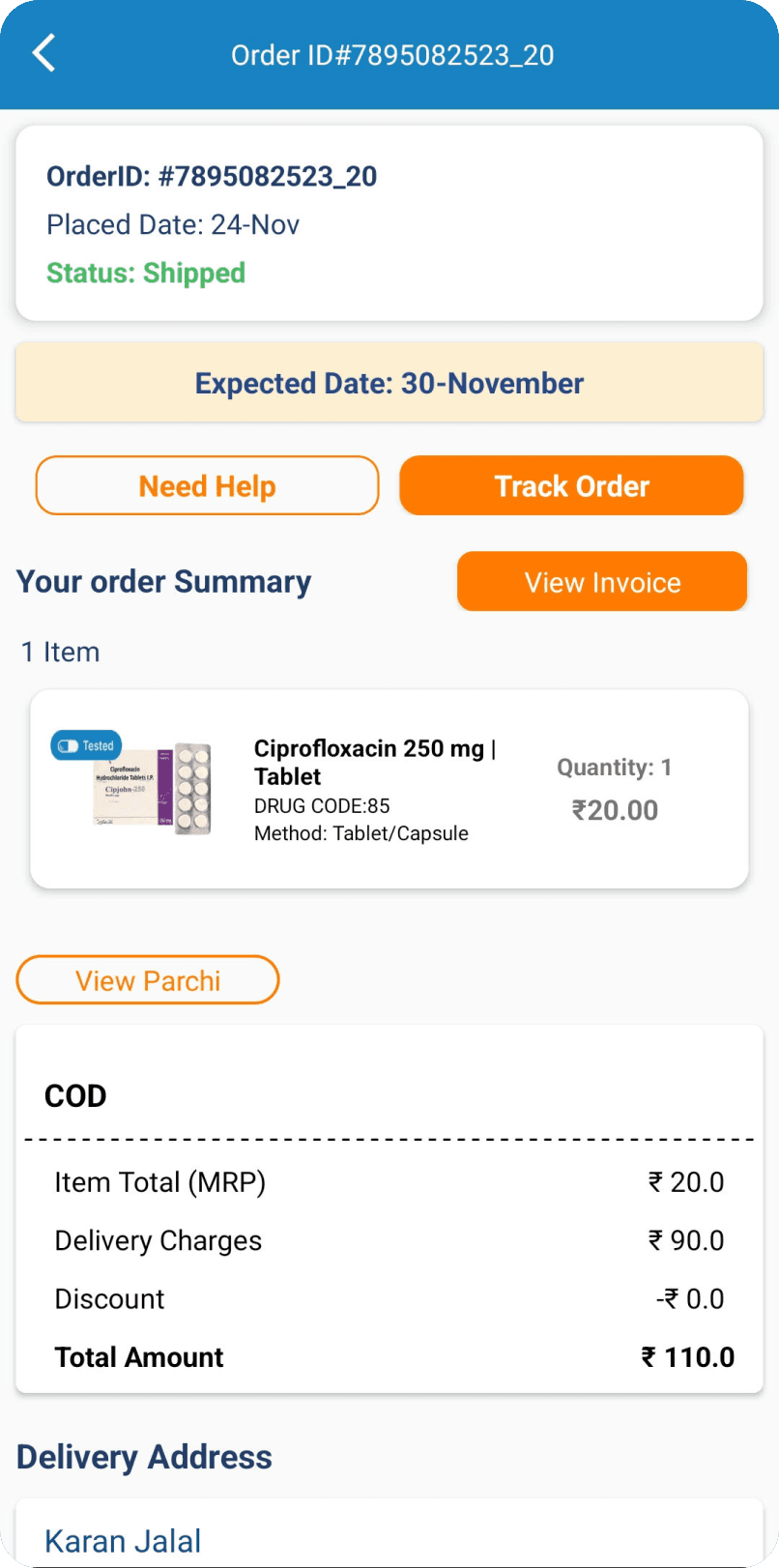
Same product different result
CHALLENGE
How do we make Sayacare’s medicine ordering experience easy to understand and easy to trust?
Design Solutions/
Clarity Around Prescription Requirements
Through stakeholder discussions and competitive analysis, I proposed introducing barcode scanning as the primary entry point, with AI ingredient analysis as a fallback when products weren’t available in the database.
Barcode Scan
AI Ingredients Scan
Clarity Around Prescription Requirements
Through stakeholder discussions and competitive analysis, I proposed introducing barcode scanning as the primary entry point, with AI ingredient analysis as a fallback when products weren’t available in the database.
Barcode Scan
AI Ingredients Scan
Research/
Primary Research
Conversations with frequent online medicine buyers (20-30 years old) revealed confusion around prescription rules, hesitation towards generics, and frustration when next steps were unclear.
Secondary Research
I reviewed Indian healthcare studies, online pharmacy reports, and public research to understand how users perceive prescriptions, generic medicines, and online ordering.
This helped identify recurring gaps around prescription clarity, trust, and anxiety during regulated purchases.
Key Insights

Insights from NCBI
Competitor Analysis
I conducted an in-depth analysis of competitors in the Indian digital pharmacy space to understand how prescription requirements and trust signals are communicated.
Goals
Establish what the market looks like right now. See if there is a direct competitor in this specific idea. Learn how other food scanning apps work.
Result
The analysis showed that while most platforms display an Rx indicator on medicine cards, users are often still allowed to proceed through checkout without completing prescription upload till the payment screen.
Ideation/
Sketch
Before moving into structured flows and UI, I usually explore quick ideas on paper. These rough sketches helped me understand what needed simplifying, how users might move through the prescription flow, and how trust cues could be surfaced naturally.
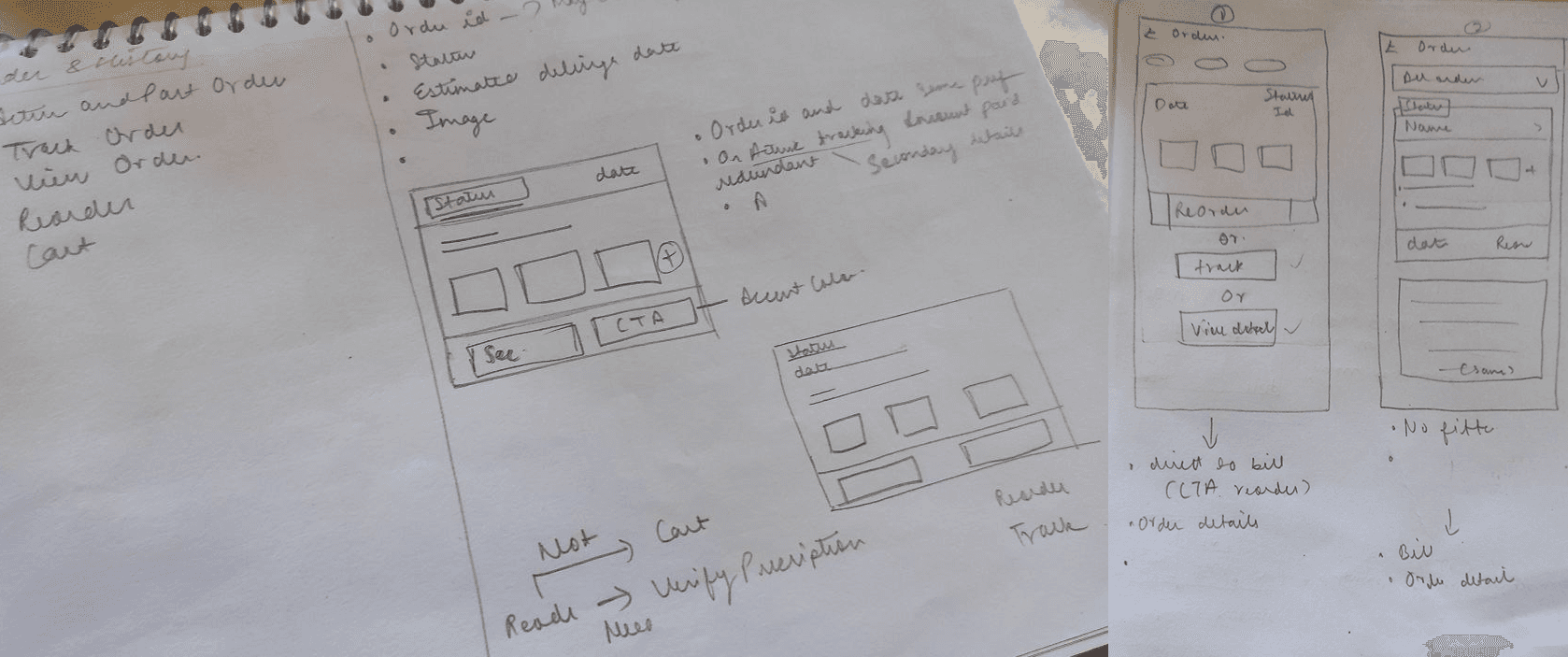
Rough sketches
Iterations
Designing the prescription flow took a few rounds of exploring what felt simple, what felt confusing, and where the unnecessary complexity lived. Each iteration taught me something different about how users understand (or don’t understand) prescriptions online.
Rough sketches
User flows
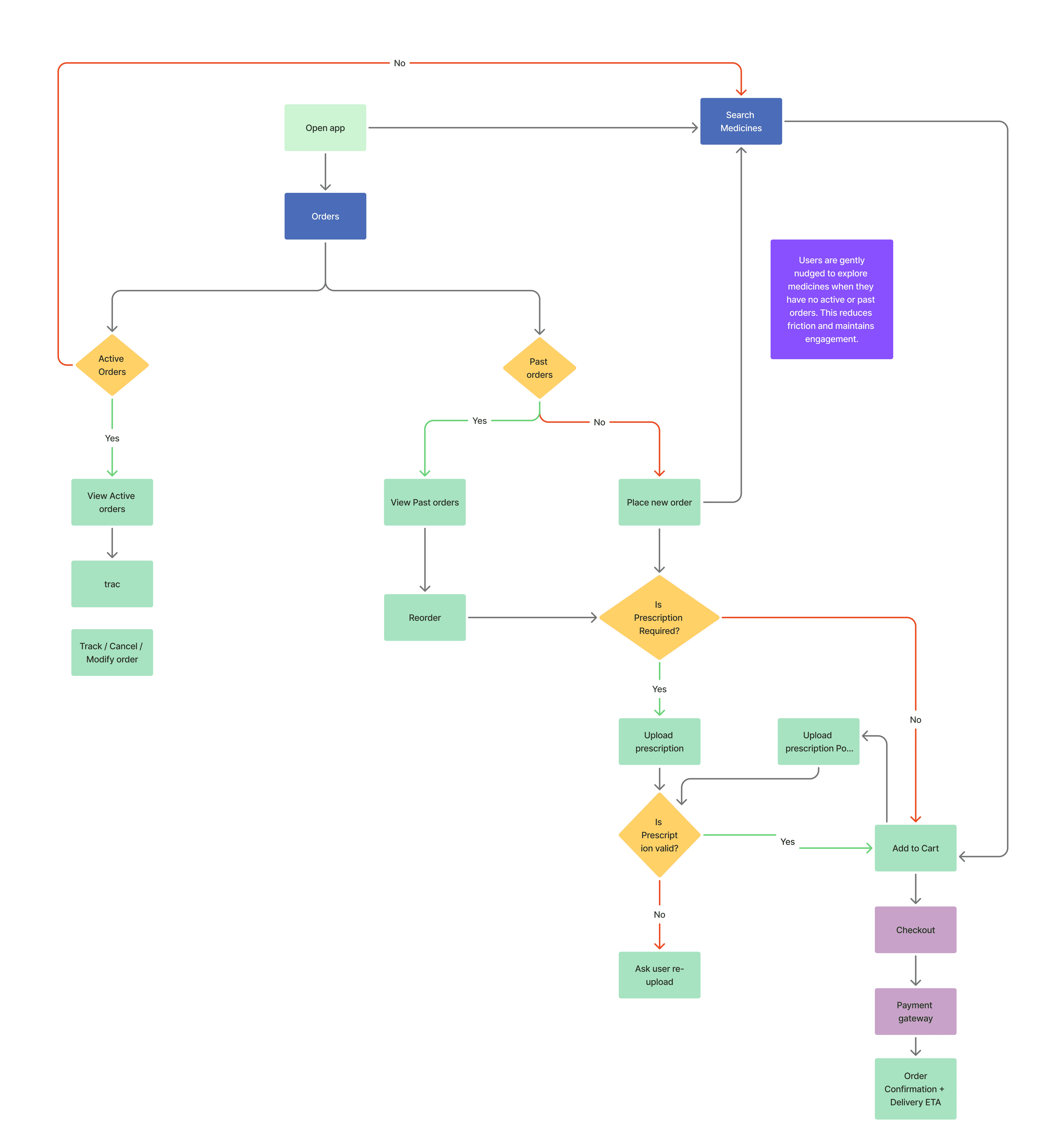
After identifying key friction points in Sayacare’s existing prescription upload process, I restructured the entire flow to reduce user confusion and decision fatigue.
Key Learnings/
Designing for trust-critical flows
In healthcare experiences, visual clarity alone is not enough. Allowing users to proceed too far without enforcing prescription requirements increased anxiety and reduce trust.
Clarity over Convenience
By intentionally introducing clarity-driven interruptions (Rx indicators, checkout prompts), the experience became more trustworthy and aligned with offline pharmacy expectations